Many product descriptions sound engaging but say little about the product itself. “Perfect for daily use” is one example, but it leaves readers wondering whether that means a daily commute, carrying school supplies, or packing for a weekend away.
This uncertainty captures a bigger problem with product content.
Businesses describe products in language that sounds appealing but doesn’t explain who they are for. Product detail page (PDP) optimization begins by replacing that doubt with information people can use.
When Copy Blends In
When you browse online stores, you come across phrases like “smart design” or “great copy.” But these words don’t say much about what makes one product different from another.
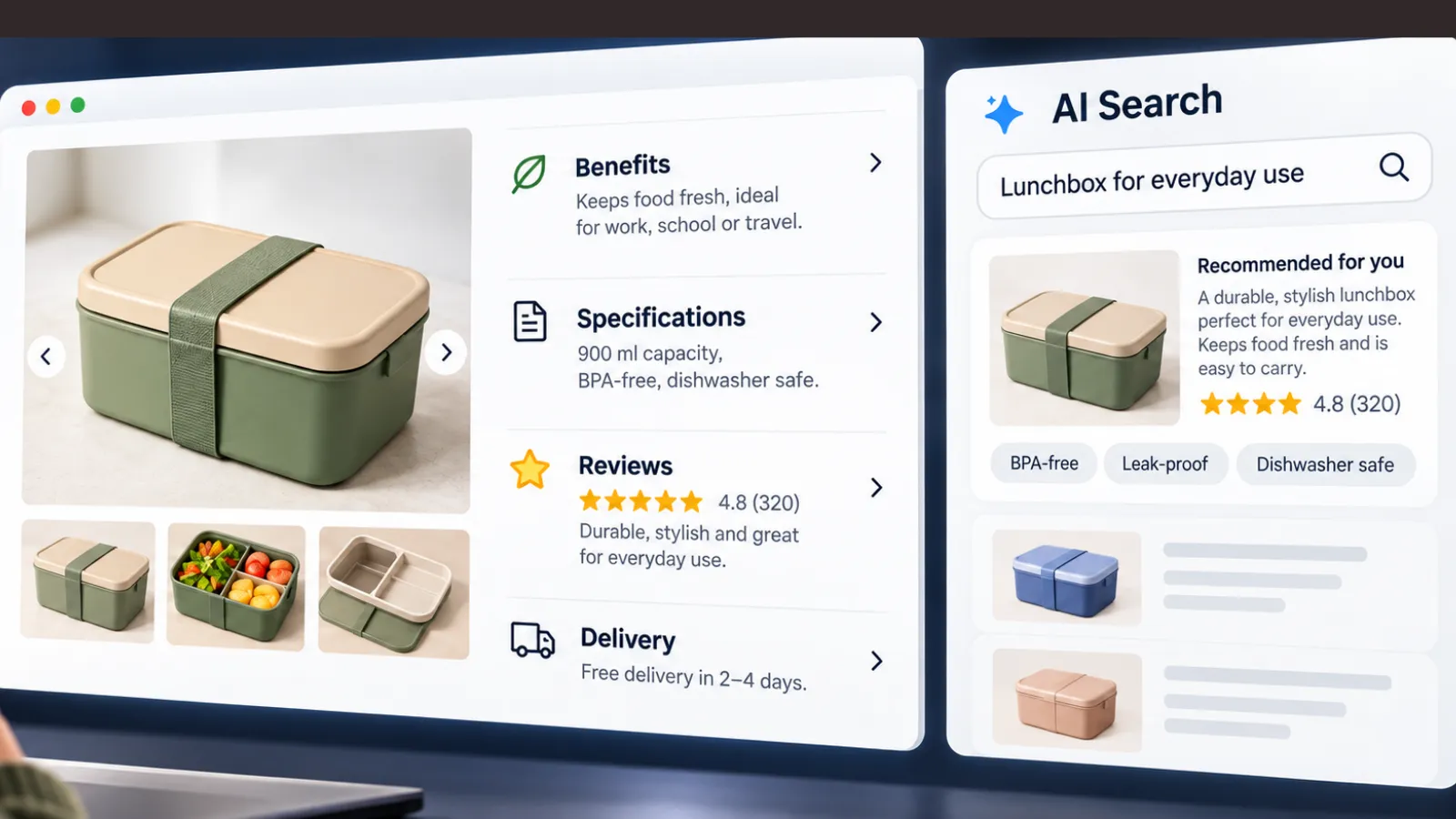
You can read the supplier’s description and save time, but your customers need more than a general overview. Helpful product detail pages explain how a product fits into their daily lives. For instance, a lunchbox could mean showing:
- How much food can it hold?
- Can it fit in a school bag?
- How easy is it to clean?
When these details are clear, people can make better decisions about whether to buy it.
Discovery Has Changed
Businesses need to understand that their product information now matters more than before. AI shopping tools can use it while researching options, comparing features, or suggesting similar products.
Adobe Digital Insights reported that traffic from AI sources to US retail sites grew 125% between April and June 2026, compared with the same period in 2025. This measures referral traffic, rather than total purchases, but shows the growing role of AI in product discovery.
However, PDP optimization does not require a separate language for machines. Google’s 2026 guidance confirms that established SEO practices remain relevant and that websites do not need a special writing format or special schema markup for its generative AI search features. Useful, original content remains the priority.
Clarity Creates Confidence
An AI recommendation may bring someone to your product page, but people still need to know if it’s right for them. People want to know what using the product will actually look like.
A picture of a lunchbox can show the appearance, but details such as whether the lid is easy to open, or if the lunchbox is leak-free when carried sideways, can help them decide if it suits their needs.
These details address e-commerce search intent while respecting the person behind the query. Writing for humans first means noticing what someone needs to understand before deciding.
Make Benefits Specific
When you focus on PDP optimization, start with a benefit that follows directly from a verified feature.
For example, “a removable divider keeps snacks separate and is easier to clean” is more useful than “designed for maximum convenience.” It explains the feature and its practical value together.
Create original product copy using:
- Product knowledge.
- Customer queries.
- Genuine use cases.
Write original product copy based on what you know about the product and what customers ask. Explain how people can use it, and make claims that you can support. Clear and honest descriptions are more helpful than big promises.
Use Helpful Headings
Headings should guide readers towards answers.
“Size and capacity,” “Cleaning instructions,” and “Returns policy” tell people exactly what to expect.
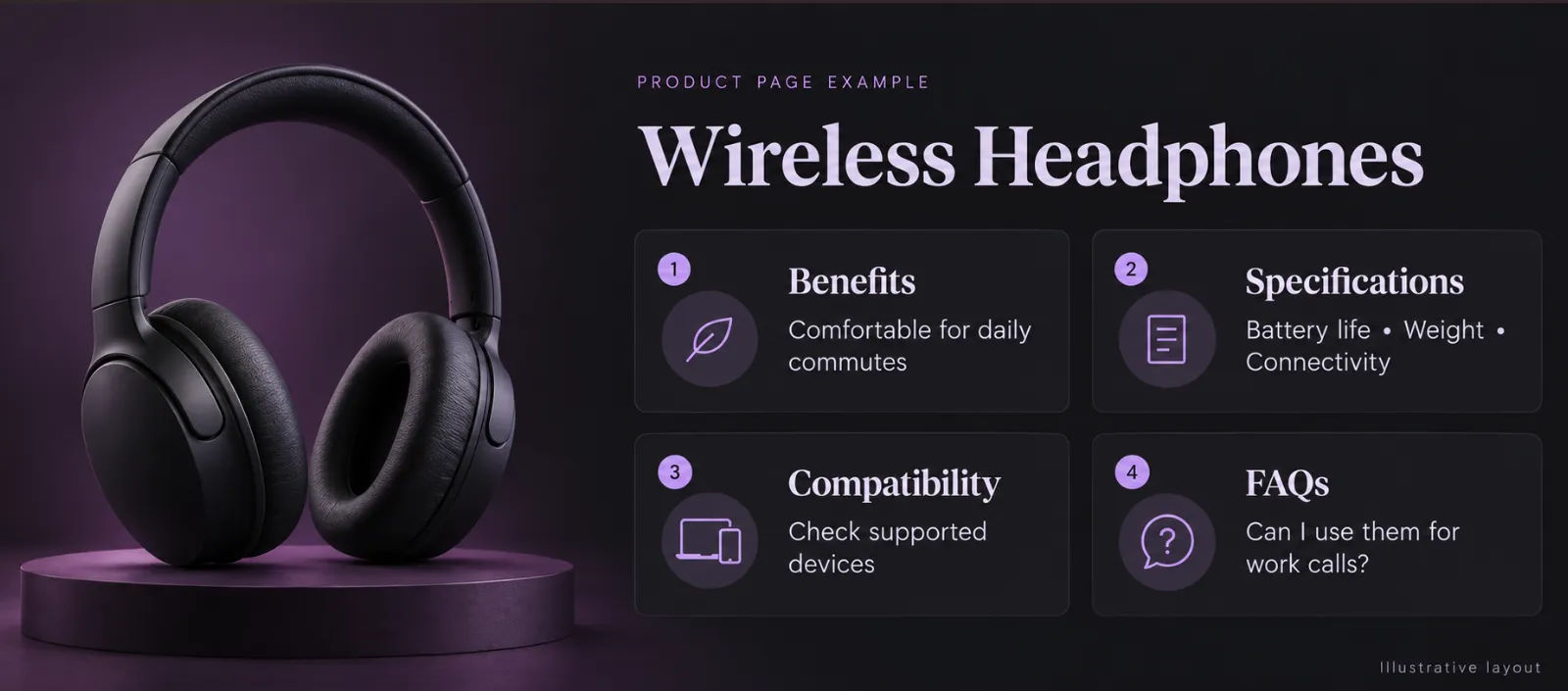
Details should be readable even if products demonstrate them. For PDP optimization, useful specifications can include:
- Dimensions, weight, materials, and capacity.
- Compatibility and included accessories.
- Care instructions and usage limitations.
- Differences between sizes, colors, or models.
Place these details where purchase is likely to occur, near the description or selector.
Answer Real Questions
Your product page may raise real customer concerns, and these questions can be addressed in the following ways:
- Create product FAQs from customer emails, support queries, and recurring issues. Focus on customer pain points, such as doubts about size, compatibility, or delivery instructions, and give answers specific to the product.
- Focus on customer reviews. Encourage them to define fit, comfort, or performance of a product over time. Make relevant feedback easy to find.
- Honest product comparisons also support PDP optimization. Compare your models using standard criteria, such as dimensions, features, and capacity. Explain who each option is best suited for instead of declaring every version is the best.
Keep Data Accurate
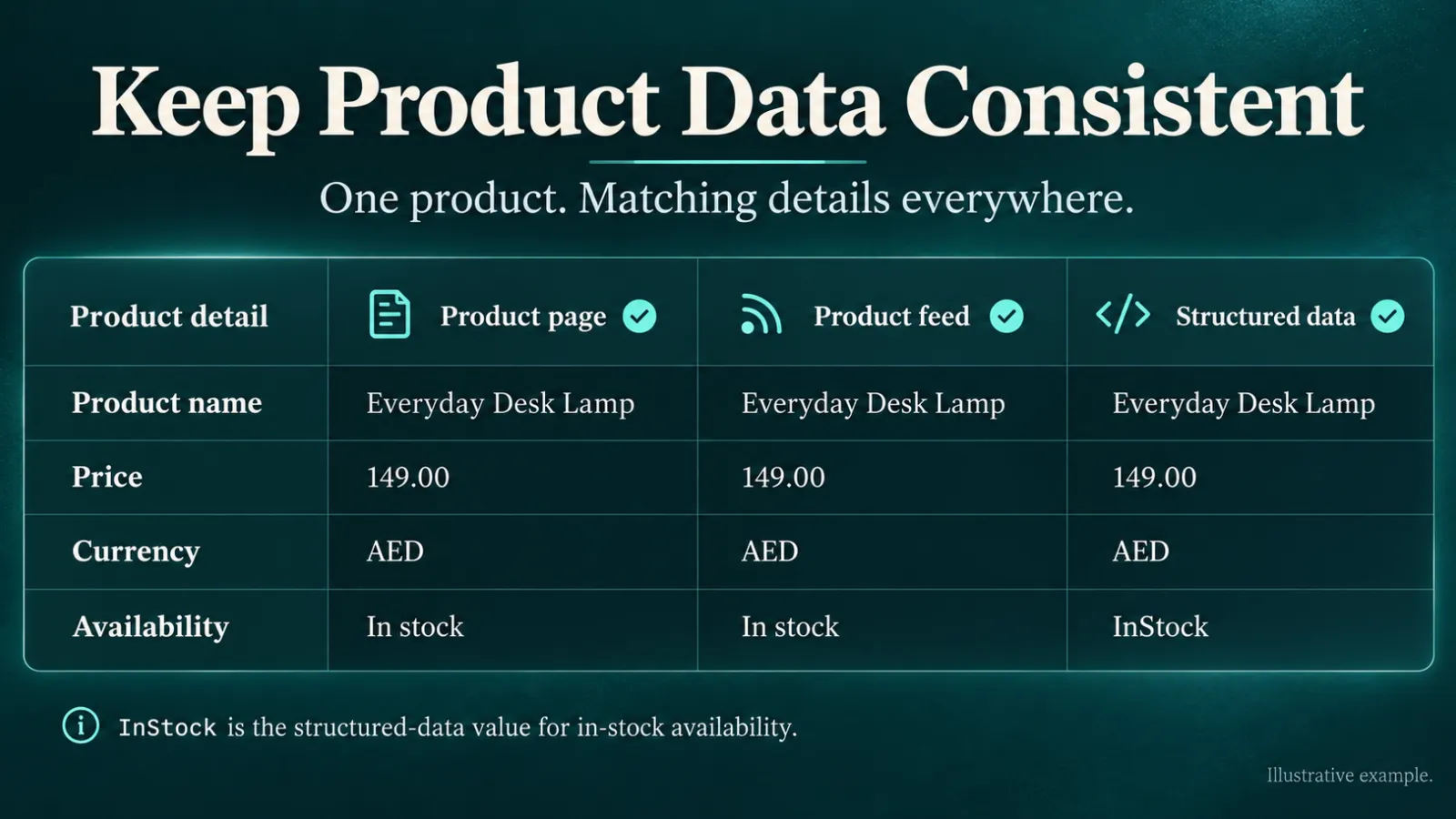
Even if your product has been described in the best convincing language, it cannot compensate for an outdated price or incorrect stock status. PDP optimization includes keeping the visible page, product feed, and structured data consistent.
Google recommends providing both Product structured data and a Merchant Center feed to help it understand and verify product information and maximise eligibility for shopping experiences. Neither guarantees an AI recommendation.
Check prices, currencies, identifiers, variants, availability, shipping, and returns regularly. For a business serving Dubai and the wider UAE, distinguish delivery estimates by location where necessary. Accurate details support more dependable AI product recommendations and prevent avoidable disappointment.
Give People Enough
If you really want to test PDP optimization, the formula is simple: can someone explain why a specific product suits them after reading the page? Clarity is essential in what a business offers. When people see enough information about a product on a page to choose confidently, it has already done something valuable.
Need clearer product or website copy? Explore my writing and content services, connect on LinkedIn, or find me on Google.
Connect With My Writing & Digital Platforms
✍️ Read More: Writing and SEO Insights
📩 Explore My Content Writing Services
💼 Connect With Me on LinkedIn
⭐ View My Google Business Profile
📸 Explore @suman.reflects on Instagram
✍️ About Suman Shafi
📝 Follow My Writings on Medium
Frequently Asked Questions
What is PDP optimization?
PDP optimization improves a product detail page’s content, usability, and data so shoppers can understand the product and make informed decisions.
Do AI search tools need different copy?
Google says no special writing format is required for its AI search features. Clear, original, accurate content remains a useful foundation.
Should benefits replace specifications?
No. Benefits explain why a feature matters; specifications provide the facts customers need to check suitability.
Which product FAQs should I include?
Prioritise genuine questions about compatibility, sizing, care, delivery, returns, and limitations. Keep answers specific to the product.
How often should product pages be updated?
Update changing information promptly. Review descriptions and FAQs when products change or customer feedback reveals missing details.