
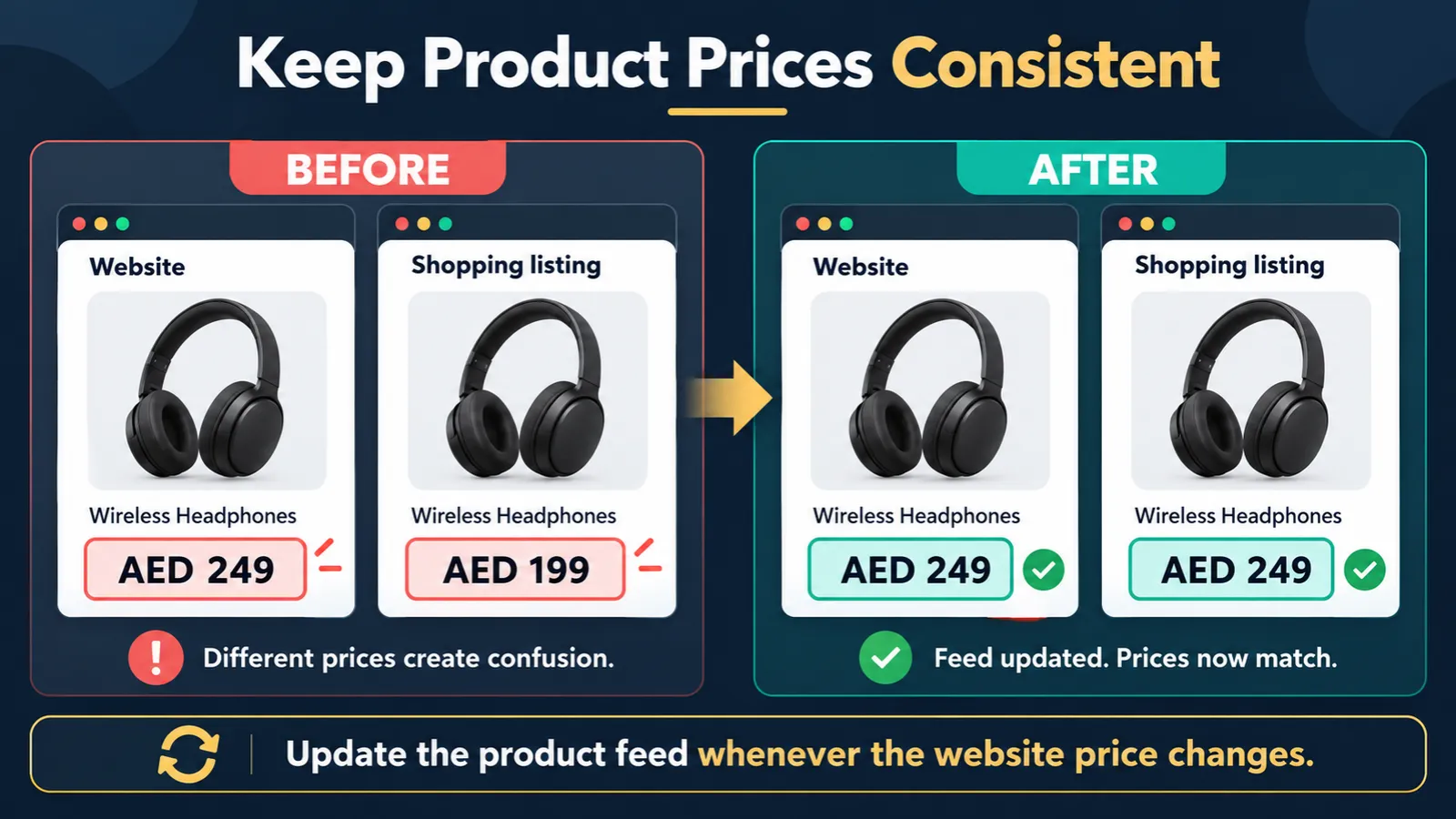
Your product sale ended yesterday. Your website shows the new price. Somewhere else, your product is still being recommended at the old price.
This small mismatch can undo the work behind a carefully written page. If a customer arrives on your page expecting one price and finds another, they have a reason to question the seller before considering buying it.
As shopping expands across search results, marketplaces, and AI assistants, businesses need to pay closer attention to the information that moves beyond their websites. Product feeds are becoming an essential part of that responsibility.
The Information Behind the Page
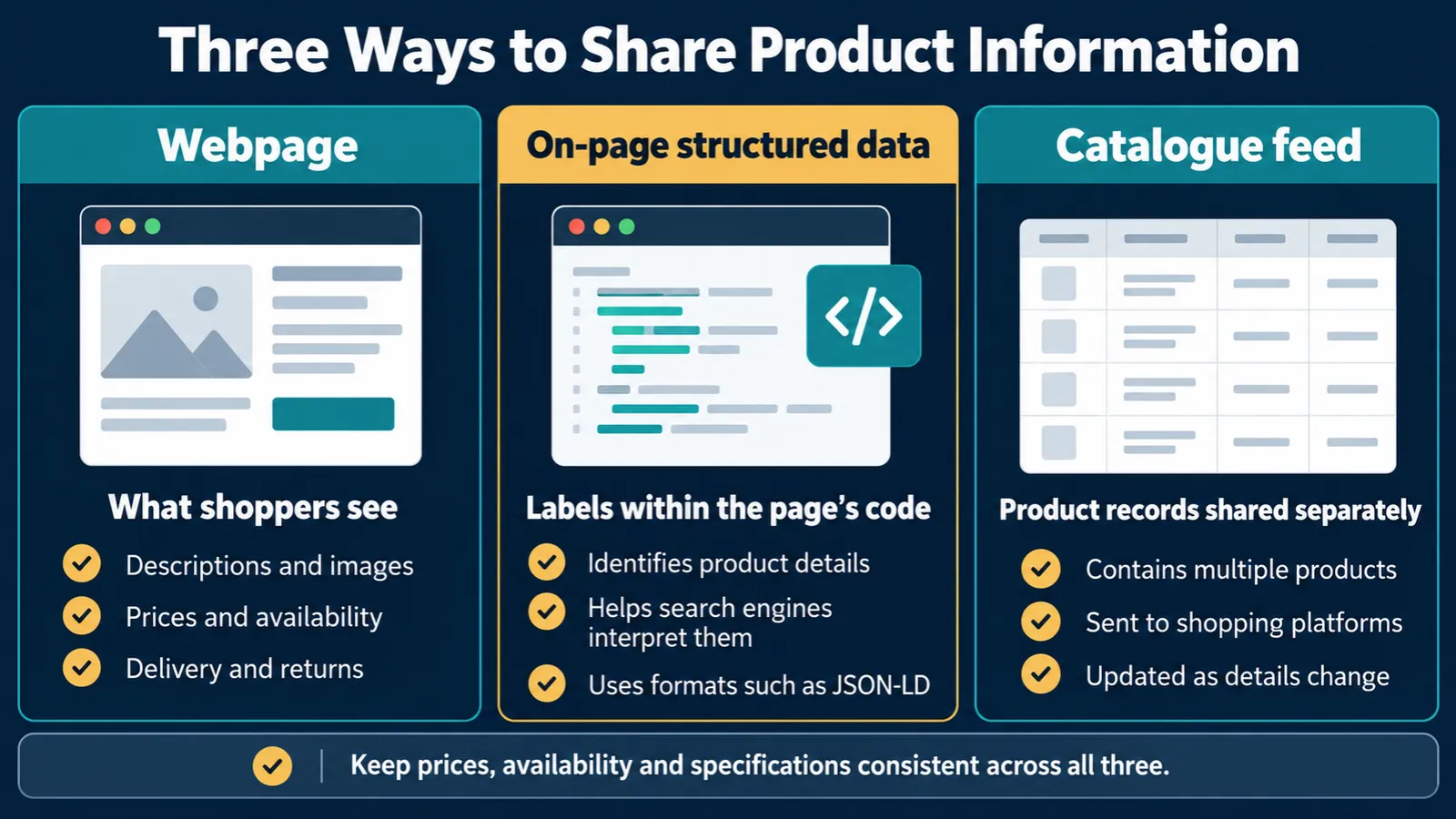
A product feed is a structured collection of product information shared with another platform. It includes titles, descriptions, identifiers, images, prices, availability, and other purchase details. While product detail pages explain a product through copy, visuals, and reassurance, product feeds organize its facts into fields that shopping systems can process.
The issue is that these two versions can grow apart.
- A product description might be updated on the website, but an older version remains unchanged in the catalogue.
- A size is sold out, but another platform continues showing it as available.
Businesses may review website copy regularly and treat the feed as something completed during setup. But product feeds need constant attention because the product details keep changing.
Discovery Needs Dependable Facts
Conversations around AI shopping focus on recommendations and checkout. Beneath those experiences sits a more practical requirement: dependable product data.
OpenAI’s commerce onboarding guidance starts with a structured product feed. It explains that catalogue information helps ChatGPT understand products and present details such as titles, descriptions, images, prices, and availability. The guidance currently limits feed onboarding to approved partners. Google also recommends supplying Product structured data on web pages and a Merchant Center feed together. These sources can help Google understand and verify information and maximize eligibility for product experiences.
- Structured data labels details on a web page.
- Product feeds supply catalogue records separately.
When the product feed and website show the same price, availability, and specifications, shopping platforms can display those details without conflicting information. Customers are then less likely to see one price in a shopping result and a different price when they visit the website.
A Growing Route To Shoppers
More shoppers are using AI tools to research products, compare choices, and decide what to buy. This gives businesses a practical reason to keep the product information shared with these platforms accurate and up to date.
In January 2026, Adobe reported that traffic from generative AI tools to US retail websites increased 693.4% year over year during November and December 2025. Adobe also noted that the user base remained modest. This measures referral growth, rather than AI’s share of all shopping. For businesses, the takeaway is that more customers are reaching stores through systems that compare and summarise products before a website visit.
Reliable product feeds give AI shopping systems specific details to compare. For example, when someone needs a dining table for a small apartment, measurements help the system identify suitable options, while stock information shows what is available to buy. A description like “beautiful furniture for modern living” does not provide enough detail to make that comparison.
Useful AI product recommendations depend partly on whether those distinctions are available and clear.
Accuracy Becomes Personal
Customers view information gaps as inconvenience. If a product information is missing, they have to spend extra time confirming details, connecting with the seller, or finding a better option. Something as simple as an unclear measurement or an outdated delivery estimate can make buying more difficult.
For instance:
- If someone measures their dining space, chooses a table, and finds that the dimensions referred to a different variant.
- Another customer sees delivery advertised across the UAE, and later discovers their address is excluded at checkout.
For a retailer serving in Dubai and other emirates, delivery location, currency, and accurate dispatch details can influence customer opinions about whether a product is reliable or not.
Product feeds use these facts for discovery. The page then gives them meaning through useful information, pictures, real reviews, and honest limitations.
Across the e-commerce journey, customers may see the same product in a search result, an AI recommendation, and the retailer’s website. The price, specifications, and delivery information should agree wherever they appear. When specific details are consistent, customers feel more confident about buying from the business.
6 Steps To Give Feeds A Regular Routine
Improving product feeds begins with a few simple checks:
1. Choose a single source of truth
Keep main specifications, prices, and inventory in a central system, then connect your channels to it where possible.
2. Describe variants clearly
Each purchasable size, color, or configuration should have the correct codes, photograph, price and availability.
3. Add clear product titles
Keeping product titles simple, and add relevant useful information, such as brand, product type, material, or capacity. For example, “Wooden Dining Table, 80 cm, Seats Two” gives shoppers more useful information than “Stunning Must-Have Dining Table.”
4. Match facts across channels
Check the feed, visible page, and structured data for conflicting prices, stock status, or specifications.
5. Refresh changing details promptly
Set updates around how often your prices and inventory change.
6. Assign responsibility
Assign an owner who can focus on feed maintenance, check errors and failed updates, and fix them.
Writers can help make product information clearer before it is added to a feed. For example, a writer may notice that a table’s dimensions are missing or that two different sizes have the same product name. They can ask the e-commerce team to confirm the measurements and label each size. Working together helps both teams give customers accurate information and makes the products easier for shopping systems to compare.
Keep the Promise Consistent
The responsibilities of product feeds extend beyond the page. They carry a product’s facts into places where the business may have little or no control over presentation.
A product description helps customers decide what to expect before they buy. If it promises a size, price, or delivery date, those details need to be correct wherever the product appears. When the buying experience matches that promise, customers have more reason to trust the business with their next order.
As Suman Shafi, I bring this into clarity with my SEO content writing services: helping businesses explain what they offer in language people can use.
Connect With My Writing & Digital Platforms
✍️ Read More: Writing and SEO Insights
💼 For Professional Updates: LinkedIn
📩 Reach Out For Content Inquiries
⭐ Business Details: Google Profile
📸 Follow @suman.reflects on Instagram
Frequently Asked Questions
What are product feeds?
Structured catalogue records shared with platforms to communicate product details, including titles, prices, images and availability.
Are feeds the same as product schema?
No. Schema labels information on webpages. Feeds provide catalogue data separately.
Do feeds replace product pages?
No. Pages provide explanations, evidence and purchase information that customers still need.
How often should feeds update?
Match updates to business activity, particularly changes in prices, stock and variants.
Do accurate feeds guarantee AI recommendations?
No. They support product understanding, but selection depends on the platform and customer’s request.