

Decision fatigue often begins long before the day feels overwhelming.
Your day doesn’t wrap up when work stops. It follows you into your home, kitchen, and even into the smallest moments of choice. By the time you decide what to cook for dinner, your brain might already be exhausted.
From the time you wake up, the constant stream of choices is glued to your existence like your better half. Thinking about what to wear, when to reply, which task to prioritize- these choices drain your mental energy.
This invisible exhaustion owns a name, and learning to manage it can change how you live each day.
What Is Decision Fatigue?
Decision fatigue is defined as a mental collapse that occurs after making too many decisions over a prolonged period. It doesn’t really care whether your choice is small or large; it uses cognitive energy. When that drops, decision quality declines.
This research was introduced by psychologist Roy F. Baumeister, who explained that the human brain works with a limited capacity for intentional decision-making. As choices increase, we tend to make quick decisions, ignore, or poorly judge by default.

This is what leads people to:
- Overeat at night after a long day.
- Delay essential tasks.
- Say “yes” when they should say “no.”
- Mentally feel drained out without understanding why.
Decision fatigue doesn’t mean you are weak; it means you are human. Recognizing it allows you to refocus and stay energized each day.
Research on the brain drain caused by decision fatigue, highlighted by Taylor’s University, shows how repeated decision-making depletes mental energy and affects clarity and focus.
Why Modern Life Makes Decision Fatigue Worse
The world today demands more decisions than ever before. From email notifications, to application updates, to endless options online, we are constantly asked to make a choice.
Common Factors of Decision Fatigue
- Each day consists of too many micro-decisions.
- Regular notifications and digital overload.
- No routines or boundaries.
- Emotional labor and people-pleasing.
When we feel responsible for managing everyone’s expectations, especially at work, our mental load increases. If you practice letting others manage their own responses and outcomes, it reduces unwanted decision-making and emotional burnout. This concept is further explored in The Let Them Theory at Work.
Signs You’re Experiencing Decision Fatigue
Some factors that contribute to decision fatigue may include:
- Hesitating on simple tasks.
- Feeling irritated or reacting emotionally.
- Not able to decide or second-guessing.
- Fuzzy thinking by late afternoon.
- Making comfort choices by default.
The initial step is to recognize these signs and work towards simplifying your daily choices.
How Decision Fatigue Impacts Your Life and Work
When decision fatigue remains unchecked, it not only affects productivity alone but also impacts emotional well-being.
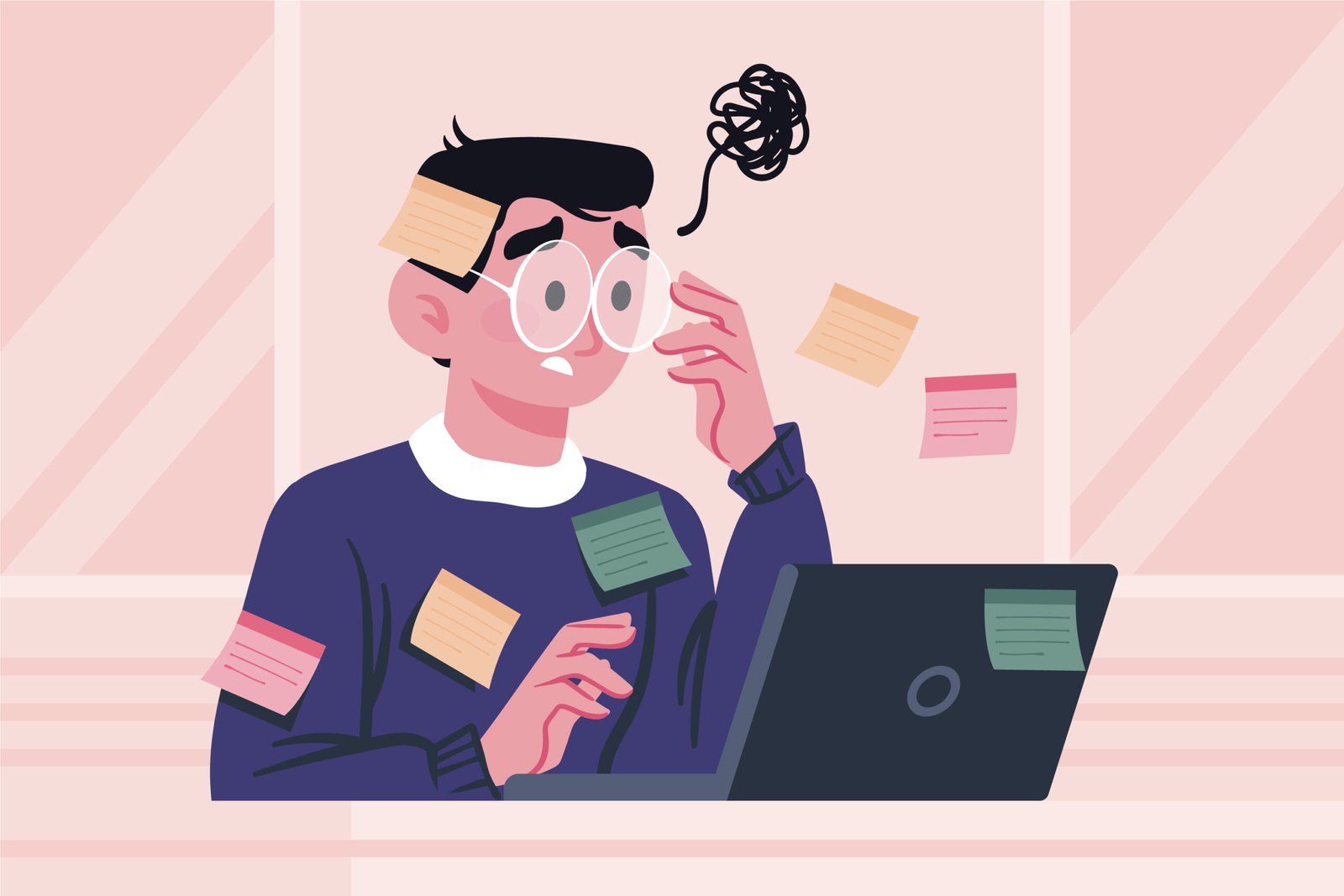
At Work
Decision fatigue rarely looks like failure and more like mental fog, stalled creativity, and an inability to focus.
- It can lead to reduced focus and creativity.
- Unable to set priorities, as every choice is a priority.
- Avoiding complex or detailed tasks.
Using structured methods like time-blocking helps reduce the number of decisions you make throughout the day by assigning, in advance, the tasks that require focus, which allows your mental energy to stay at work instead of making unnecessary choices.
At Home
Home should feel like rest, but when decision fatigue follows you through the door, even small moments feel heavy.
- It limits patience with loved ones.
- Mentally drained from “thinking all day.”
- Making small decisions becomes difficult.
In relationships, this mental exhaustion escalates through overbearing emotions, expectations, or results. When you practice allowing others to be responsible for their own reactions (as explored in The Let Them Theory in Relationships), it can ease emotional load and restore patience at home.
For Parents
Decision fatigue is often amplified for parents. Each day involves a stream of invisible choices- what’s best, what’s safe, what’s fair, what’s educational, and what stops conflict. The constant mental juggling leaves less room for rest.
When parents feel mentally drained, it shows up as:
- Quick frustration and less patience.
- Over-correcting or over-explaining
- The guilt about “getting it right.”
When children are given space to experience age-appropriate independency, without the need to control every outcome, it reduces the emotional and cognitive load. Letting some things be good enough creates space for connection instead of control.
Simple Strategies to Reduce Decision Fatigue
Decision fatigue can be resolved if you work on it each day and consistently.
1. Create Default Decisions
Remove unnecessary choices by setting defaults.
Wearing similar outfits.
Planning weekly meals.
Make routines.
This reduces the mental load. Many high performers simplify wardrobe choices to preserve energy for meaningful work.
This approach reflects intentional living, where daily habits, such as a consistent gratitude practice, are chosen with awareness rather than impulse, allowing mental energy to be spent on what truly matters.
2. Batch Decisions
Group similar decisions together.
Meal planning once a week.
Scheduling emails in a set time block.
This tunes out constant decision-making.
3. Decide First, Act Later
Make important decisions when your energy is highest, usually in the mornings. Save routine tasks for later in the day.
4. Reduce Digital Noise
Set a limit to notifications and social media consumption. Each alert demands attention and decision-making capacity.
According to the Mayo Clinic, stress management and mental overload are essential for preserving cognitive energy and preventing emotional exhaustion.
Download the Decision Fatigue Reset Worksheet to bring more ease and intention into your daily choices.
The Power of Simplifying Daily Choices
Reducing decision fatigue is not avoiding responsibilities. It means choosing intentionally.
When you simplify daily choices, the following happens:
- Your mental clarity increases.
- You regulate better emotionally.
- Your creative mind flows freely.
- Energy remains preserved for what matters.
Simplifying your day is not restriction or avoidance. It’s liberation.
Decision Fatigue and Emotional Awareness
Usually, decision fatigue covers deeper emotional needs- rest, peace, clarity, or boundaries. When our decision-making speed slows down, we create space to listen to ourselves.
At this point, emotional awareness meets practical self-care.
Personal Reflection
For many years, decision fatigue was my persona. I noticed this in my exhaustion before noon, feeling brain-dead to decide on something important. This wasn’t happening by doing, but from deciding too much.
When I simplified my routines, my life got gentler. Fewer decisions made way for presence, and that gave me peace.
Sometimes, clarity doesn’t come from adding answers, but from removing noise.

If You’d Like to Explore More
- The Let Them Theory Series
- Energy Management vs Time Management
- Time-Blocking Guide for Busy People
- Building the Habit of Gratitude
- Listening to Your Inner Critic
- Parenting Your Inner Child